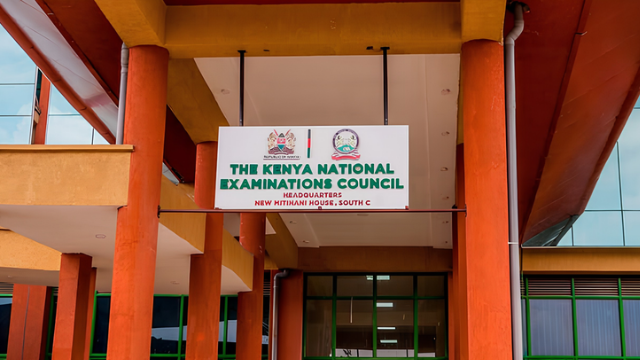
The Kenya National Examinations Council (KNEC) uses a competency-based grading system to assess learners sitting the Kenya Primary School Education Assessment (KPSEA) and the Kenya Junior School Education Assessment (KJSEA) in 2026. The system focuses on learners’ competencies, individual subject performance and educational progress rather than relying solely on total marks or aggregate scores.
On Tuesday, October 27, 2026, Grade 6 and Grade 9 learners are undertaking their national assessments under Kenya’s Competency-Based Education (CBE) system. The assessments are intended to help identify learners’ strengths, highlight areas requiring improvement and support their transition to the next stage of education.
Unlike the former 8-4-4 education system, which placed significant emphasis on examination marks, mean scores and school rankings, the competency-based approach evaluates learners across individual learning areas. KNEC has also cautioned schools against publishing unofficial KJSEA rankings based on aggregate scores, as these do not reflect the official assessment and reporting framework.
What Are KPSEA and KJSEA?
The Kenya Primary School Education Assessment (KPSEA) is taken by learners completing Grade 6, while the Kenya Junior School Education Assessment (KJSEA) is taken by learners completing Grade 9.
KPSEA helps assess learners’ progress at the end of primary school. KJSEA evaluates competencies acquired during junior school and helps inform decisions about learners’ progression to senior school. Both assessments form part of Kenya’s Competency-Based Education system, which aims to support learners according to their abilities, interests and demonstrated competencies.
KPSEA and KJSEA Grading System 2026
Under the KJSEA grading framework, learners receive performance levels for individual learning areas. The results use an eight-point scale grouped into four main performance categories.
The categories are as follows:
| Performance Category | Grading Levels | Meaning |
|---|---|---|
| Exceeding Expectations (EE) | EE1 and EE2 | The learner demonstrates competencies beyond the expected level. |
| Meeting Expectations (ME) | ME1 and ME2 | The learner has attained the expected competencies. |
| Approaching Expectations (AE) | AE1 and AE2 | The learner is progressing towards the expected competencies. |
| Below Expectations (BE) | BE1 and BE2 | The learner requires additional support to attain the expected competencies. |
The eight-point scale runs from Point 1, the lowest performance level, to Point 8, the highest. These points are used to report performance in individual learning areas. They are not added together to produce an official KJSEA aggregate score.
The grading system is designed to provide parents, teachers and learners with a clearer understanding of academic progress and the competencies that need further development.
How KJSEA Results Are Calculated in 2026
KJSEA results are determined using three assessment components: the Grade 9 summative assessment, school-based assessments conducted during Grades 7 and 8, and the results obtained in KPSEA during Grade 6. According to the assessment framework outlined by KNEC, the components contribute to the final KJSEA outcome as follows:
| Assessment Component | Contribution |
|---|---|
| Grade 9 KJSEA summative assessment | 60% |
| School-based assessments in Grades 7 and 8 | 20% |
| Grade 6 KPSEA results | 20% |
| Total | 100% |
This means that the Grade 9 assessment accounts for 60 per cent of the final outcome, while the two earlier assessment components contribute the remaining 40 per cent.
Consequently, KJSEA results are not determined by the Grade 9 examination alone. A learner’s performance throughout the assessment cycle also contributes to the overall assessment outcome. The approach provides a broader picture of a learner’s development by taking into account performance over several years rather than relying entirely on one examination.
Are KPSEA and KJSEA Marks Added Together?
No. Under the competency-based reporting framework described by KNEC, the nine KJSEA learning areas are not combined into one official aggregate score for ranking learners or schools.
Instead, results are reported through individual learning-area performance levels. The assessment components contribute to the final outcome, but this does not mean that the grades from all nine learning areas should be added together to create a school mean score or an overall ranking.
Parents should therefore interpret the results by looking at the performance recorded in each learning area and the competencies demonstrated by the learner.
This distinction is important because calculations based on unofficial totals may give parents a misleading impression of a learner’s performance.
Why KNEC Does Not Allow Official KJSEA School Rankings
Under the former 8-4-4 system, schools were frequently compared using mean scores, total marks and examination league tables. The competency-based system takes a different approach by focusing on individual learning progress and the development of competencies.
KNEC has warned schools against publishing unofficial KJSEA mean scores, aggregate points and league tables that claim to rank schools according to their assessment results.
Such rankings do not represent the official reporting framework and may mislead parents when comparing schools or interpreting their children’s performance.
The absence of an official aggregate score is intended to discourage excessive competition based on total marks and encourage greater attention to learners’ abilities, interests and educational needs.
Parents should rely on official assessment information and the performance levels reported for their children rather than unofficial school rankings circulating online or through social media.
How KJSEA Results Help Determine Senior School Pathways
KJSEA results help inform learners’ transition from junior school to senior school. The assessment framework supports the identification of individual strengths and interests that can guide learners towards appropriate educational pathways.
The three senior-school pathways are:
1. Science, Technology, Engineering and Mathematics (STEM)
This pathway is intended for learners interested in science, technology, engineering, mathematics and related areas of study.
2. Social Sciences
This pathway caters to learning areas related to society, humanities and other social-science disciplines.
3. Arts and Sports Science
This pathway supports learners interested in creative arts, sports and related areas of talent development.
Performance across individual learning areas can help inform pathway choices. However, pathway placement should not be interpreted as a decision based on a single aggregate score. The applicable placement guidelines and other relevant considerations should also be followed.
What Parents Should Know About the 2026 KPSEA and KJSEA Results
Parents and guardians should understand that the competency-based grading system is intended to provide more detailed information about learners’ educational progress.
When reviewing results, parents should:
- Check the performance levels recorded for each learning area.
- Identify subjects in which the learner has demonstrated strong competencies.
- Discuss areas requiring improvement with teachers.
- Use the results to support appropriate learning and educational pathway decisions.
- Avoid relying on unofficial aggregate scores or school rankings circulated online.
Parents can also consult KNEC’s official communications for further information about assessment arrangements and the interpretation of results.
Conclusion
The KPSEA and KJSEA grading system for 2026 reflects Kenya’s shift towards competency-based assessment. Instead of relying primarily on aggregate marks and school mean scores, the system evaluates learners’ performance across individual learning areas and considers their progress throughout the assessment cycle.
KJSEA results incorporate the Grade 9 summative assessment, school-based assessments from Grades 7 and 8, and KPSEA results from Grade 6. The results help identify learners’ strengths, highlight areas requiring additional support and inform their transition to senior school. For parents, the most important point is to understand each learner’s performance on its own merits rather than relying on unofficial rankings. The purpose of the assessment is to support learning, recognise individual potential and help learners progress towards suitable educational pathways.